Navigation Bar

Showing posts with label butterflies and moths. Show all posts

Sunday, July 28, 2019

Thistle Dew, A Writer's Dream


Anyone who has ever met me knows how much I love a house with an old soul. They also know writing feeds something within me. I found both this past weekend at Thistle Dew, a bed and breakfast owned by Andrea and Walter Kaczor. Andrea and Walt are two of the nicest people you could ever hope to meet. Andrea, a fellow writer, opened the B&B up to fellow authors several years ago for weekend writing retreats. She and her husband purchased the property and have spent the past several years turning it into the charming getaway it is.


The original stone house was built in 1809 by land agent James Sheldon. Today, the property at Thistle Dew encompasses nearly 300 acres of rolling hills, ponds, a tennis court, barn, cabin, and countless little hideaways fit for walking, exploring, or sitting in peaceful silence. It's full of antiques brimming with history and patina. It is a perfect place to soak in the quiet and let your imagination flow.


I had the distinct pleasure of sharing this wonderful weekend with a handful of other author friends. We each made a meal for part of the weekend, and shared great conversations as well as peaceful nights under the stars. Andrea and Walt explained some of Thistle Dew's rich history, from its beginnings as a tavern and carriage house to hosting officers during the War of 1812. They invited me to explore the property at my leisure, and when indoors, I wandered the house checking out all the interesting collectibles and antiques.


Outside, it is just as much a feast for the senses. Wildlife is everywhere, from deer roaming the fields to birds and pollinators of every variety. Andrea and Walt's dog, Lowca (pronounced "WOLF-ka" and meaning "hunter" in Polish), is the unofficial greeter and host to everyone who stays at Thistle Dew.


Our final evening at Thistle Dew ended with a beautiful rainbow, then sunset. Andrea and Walt saw us off the next morning with goodbyes and invitations to visit again, and I don't doubt I will. It's rare to go away and feel immediately at home where you land, but Thistle Dew is definitely that sort of place. I'm so glad I finally made it there!

Friday, April 22, 2016

Happy Earth Day!


Happy Earth Day!

I hope you're doing something outdoorsy today - at least for a little while.  I spent last weekend planting flower and vegetable seeds in preparation for the growing season.  I've already got some sprouts!  I can't wait to get out there into my butterfly garden and positively pack it with butterfly-friendly flowers.  I've started spinach, lettuce, and beet greens in my raised bed greenhouse, and the warmer-season seeds like beans, peppers, and tomatoes in peat pots indoors.

Free Book!

The Earth Day Giveaway is still going on, and there aren't a lot of entries yet, so if you're looking for a free read this spring, what better way than to fill out the simple form at this link, and tell me what you're up to this Earth Day? Click here to enter: https://nickigreenwood.wufoo.com/forms/nickigreenwoodcom-earth-day-giveaway/

Have a terrific Earth Day, everyone!

Friday, March 20, 2015

Happy Spring!

Spring officially begins today, and not a moment too soon, if you ask me.  It's been an exceptionally difficult winter.  We've been spoiled for so many years in the Northeast by mild winters.  When the snowbanks started getting taller than me, it was a bit much to take.  So, welcome to green grass and singing birds and sunny days!

My gardens are in a sad state, so one of my outdoor to-dos this spring will be to tear out the butterfly garden's messy spots and start fresh.  My vegetable garden needs a top-off with some new compost, and I think I will start with already-sprouted plants this year to get a jump on the growing season.  Oh, a reason to go to my garden supply store?  As if I needed one!

Indoors, I plan to open every single window to flush out that stale air.  House plants can only do so much!  We're also looking into getting some new flooring in the kitchen, foyer, and living room. It will be exciting to have fresh, easy-clean floors.  I can't wait to get started.

Happy Spring!

Thursday, February 20, 2014

Gardening for Bees

If you've been following my blog for a while, you know I have three gardens: one is my front landscape, one is specifically for butterflies, and one is for veggies to feed my family.  The landscape and butterfly gardens are also a favorite haunt of many different kinds of insects, including bees.
 
I get excited when I see bees these days, because worldwide, they're in decline, just like butterflies.  Beekeepers have been reporting a 30 to 50 percent loss of their hives.  That's staggering, and it means trouble for our food industry.  We are much more dependent on bees than most people realize for our fruits and vegetables.  Losing them would mean a huge hole in the food web, and we could find ourselves quite literally starving.
 
The Culprit
 
Research is pointing at systemic insecticides called neonicotinoids, which infiltrate all parts of the plants on which they are used.  That includes the pollen which bees collect and eat.  This mass application of a pesticide is having a ripple effect that, ultimately, harms our food supply rather than helping it.
 
Pesticides are not a new threat.  In 1962, Rachel Carson published a book called Silent Spring, which addressed the negative effects of pesticides on birds.  More than fifty years later, we're still fighting this fight, and it's hard to understand why.
 
Bee-ing the Solution
 
What can you do?  Well, you can do what I did: plant native-plant gardens, and vow to go pesticide-free.  There are many articles and resources on environmental gardening, and the results are healthier for you and your planet.  Share your yard with insects and wildlife, and form a mutual respect for your wild neighbors.  (Most bees are actually quite docile - too busy dotting your flowers in search of pollen to be bothered with you!)
 
There are caveats to bee- and butterfly-friendly plant claims.  A recent article in Organic Gardening caught my attention on this subject, and I did some investigating.  The environmental group Friends of the Earth tested a small sampling of plants purchased from major chain stores like Home Depot and Lowe's.  They found neonicotinoids in over half of the plants tested, even though the plants were labeled "bee friendly."  So, a warning: although that species of aster might be favored by bees, the specimen you're looking at could poison them.
 
Your best bet is to find plants from reputable garden centers that use no pesticides on their bee-friendly stock ... or from a friendly, local gardener who does the same.  Neonicotinoids can stay present in plant tissue for several years, so you could be doing harm to the bee and butterfly populations without even realizing it.  Make sure that what you put into your garden is truly organic and pesticide-free.  The bees will thank you by making sure your flowers, fruits and vegetables come back fuller and more robust each year.

Sunday, April 07, 2013

The Butterflies (and Flowers) Are Returning!

Spring and autumn are my favorite seasons, because the cooler-but-not-too-cool temperatures encourage me to get outside.  Last weekend, I put up most of my windchimes, though a few need repair.  I also started trimming back and cleaning up my gardens in preparation for spring.  Today, I relaxed a bit outside and read a book, and during one of my trips across the lawn, I spied a Mourning Cloak butterfly (Nymphalis antiopa).


This pretty little surprise (and early, I thought) was sitting on the lawn, taking a rest from trying to fly in our breezy weather.  I tried to catch a picture of it, but it fluttered off into the wind before I was able to do so.  (This picture is from Wikipedia.)

The next little treat I noticed is that my bulbs are coming up.  The crocus in my front yard have popped up, the daffodils are just starting to sprout, and these little beauties are in my butterfly garden already:


This is Glory-of-the-Snow (Chionodoxa lucilae).  I'd forgotten I even planted it last fall, so it was a nice surprise to see it had already sprung up.  More than anything, the butterflies and flowers let me know the warm weather is approaching.  Happy spring!

Friday, August 17, 2012

If You Build It, They Will Come (v. 2.0)

Today's the day my persistence (and environmentally-concerned determination) paid off. Close to a year and a half after building my butterfly garden, I got what I've been waiting for.

I was outside today, thinking, "Gee, I really ought to trim back some of the leggier stuff in my garden. It's been so hot, I haven't done much, and everything's gone haywire." No sooner did I start trimming back the leggy stuff and unwanted volunteer seedings, than I hit the brakes. There, tucked in the back on a milkweed seedling, I found a Monarch Butterfly caterpillar!


Needless to say, I'm elated. This is what I built the garden for: to help along the Monarch species, which has been in a devastating decline due to habitat loss and pesticide use. And now, proof positive that my garden lives up to the purpose for which I built it!

Well, I ran right out and bought some mulch and began laying it ever-so-gently in between plants, where bare soil still existed (never did any mulching except a "green mulch" this year with a thick mat of Alyssum "Carpet-of-Snow" plants to keep the soil in place and somewhat moist). This will also help the various insects find places to hide.

Well, there I am with a bag of mulch on my shoulder, and as I approach the garden, I see a Giant Swallowtail on my butterfly bush:


Double yay! I am now considering registering my little side garden with Monarch Watch, an organization dedicated to helping this butterfly species survive. Of course, other species of butterfly and insect are always welcome. My property is wildlife-friendly, and I'm proud of that.

I don't even mind when the Ruby-Throated Hummingbirds fly by and holler at me to refill their feeder ... again. :)

Sunday, June 17, 2012

Lots of Visitors Today!

Many visitors at Greenwood House today! Images are not my own. In order of appearance, they are: Downy Woodpecker, courtesy of stock.xchng; Question Mark Butterfly, courtesy of djringer.com; Clouded Sulphur Butterfly, courtesy of Ecobirder. I really need to get a better camera, because all these critters are right in my backyard, and I don't have a decent camera anymore to snap a shot of them!


The Downy Woodpecker visited my suet feeders this morning. The Question Mark Butterfly was hanging out by my garden's compost heap, and the Clouded Sulphur Butterfly was flitting across the lawn. We also discovered that our Colorado Blue Spruce tree sports a nest of baby birds! I hope we didn't disturb them too much. Once we realized they were there - and alive - we kept our distance. I think they may be Purple Finch babies. I'll have to watch to see if Mom and Dad show up to feed them!

Thursday, June 14, 2012

More Glimpses From The Garden

My gardens are flourishing this spring, with a profusion of clematis blooms on the butterfly garden's trellis, and a fluttery visitor or two as well. All this with almost no effort on my part.

As the lazy gardener that I am, I purposely chose plants that require little to no care or watering. Native plants are best for this - plants which are at home in your planting zone and native to your corner of the world. Once they take root, they need very little attention, as long as they are situated in the right spot for sun exposure, drainage, and eventual plant size.


I checked, double checked, and re-checked everything before planting, so everything has come in beautifully, and I only have to pay my gardens the occasional visit for weeding, pruning, or watering. Nature does the rest, just as she should. Any other attention I give my plants is just from the pleasure of looking at them.


No monarchs in sight yet, but my Lamium did receive a visit from a male cabbage white butterfly, who let me get as close as six inches from him to take my photographs. What a shame my normal camera died. I had to take this with my iPod, and I'm sorry to say it came out a little grainy. All the same, a lovely shot, and I'm glad to see my plantings getting some good use by the local wildlife!

Wednesday, May 23, 2012

Supermoth!

We had a visitor at work today - and not the two-legged kind.

My coworker came in from her break with a picture of a striking - and very big, she said - critter that looked, at first glance, like a butterfly. Since it was out in broad daylight, and sitting with its wings straight up, I assumed it was a butterfly.


Turns out, it is Hyalophora cecropia, North America's largest moth. I went out to get a better look at it, and it sports the fuzzy body and feathered antennae common to all moths. But unlike other moths (and most butterflies) I have seen, this fellow was huge. He was about 5-1/2 to 6 inches in wingspan, by my guess. And very striking for a moth, too. My only question is, why was he out in the daytime?

Maybe he was telling us to go home and get a nap.

Saturday, May 05, 2012

...And Sometimes It's Just Dumb Luck

Today, while hubby was out in the yard working on our new deck, I noticed several Red Admiral butterflies, who had decided to stay over in our yard following this past week's huge migration of them.

They invariably lit on the dandelions in the sunny parts of our not-yet-mowed yard, and after following them around for a half hour with a camera, I managed to sneak up behind one and snap this spectacular shot:


When I say "sneak," I mean it. After losing out by approaching each of the previous prospects from the front or side, when they fluttered away, I decided to approach from behind. Success! This one was too busy getting nectar to be bothered with me. It rested for a while, ate, and then opened its wings for the perfect shot. My first butterfly photo! Woot!

Just goes to show you: if you want something, keep trying. Fifty percent of it is work. The other half is just dumb luck. :)

Wednesday, July 27, 2011

I'm A Mom Again (Sort Of)!

This morning I had a treat waiting for me when I visited my butterfly garden: the (alleged) Monarch butterfly eggs have hatched! It took three days from the time I first noticed the eggs. They're tiny yet, not even 1 x 3 millimeter in size, and they barely look like anything yet. (They bear a creepy resemblance to tiny maggots right now ... eww.) I will be keeping a close eye on them over the next two weeks while they grow. At two weeks, they should be fat, 2-inch caterpillars with black, white, and yellow stripes, assuming they are in fact Monarchs. Here's the picture I snapped today:


The thing that makes me wonder if they are Monarchs is that the eggs were laid in a cluster, rather than dotted all around the underside of the leaf as I have read Monarchs do. It could be that my Monarch mom was an anomaly. It could even be that these are a whole different species of butterfly ... though from everything I've read, if you find butterfly eggs on a milkweed, they're bound to be Monarch eggs. Time will tell! If you want to learn more about the Monarch butterfly life cycle, which takes about a month to complete from egg to adult, visit Rose Franklin's Monarch Metamorphosis page!

Monday, July 25, 2011

Success (I think)!

Took a tour of my butterfly garden yesterday, whilst lamenting that I hadn't seen more than two species of butterfly anywhere in the vicinity. (The insects are enjoying it quite a bit, though.) I examined my Asclepias incarnata 'Ice Ballet' (known by the less pretty name Swamp Milkweed), to find a cluster of some 50 eggs which I hope will turn out to be Monarch butterfly eggs!


Only after I mentioned this to my husband did he remember to tell me he'd seen a Monarch flit through our backyard the previous day. *rolls eyes*

I will keep you all posted, as I plan to make daily trips out to the butterfly garden to see how and when the eggs hatch. If my milkweed starts looking like Swiss cheese, and I see little black, yellow and white striped caterpillars, I'll know I've hit the jackpot.

I also saw a pair of damselflies hovering around my Morning Glories. Not sure what species it was, but this is what he looked like. These guys are voracious eaters of pesky insects like beetles, flies and mosquitoes, so I was happy to welcome him:


My 'Pink Delight' butterfly bush (Buddleia davidii) was also blooming nicely. Looked like the bugs had been visiting it, since it was a bit chewed here and there. With a butterfly garden, you want things to be a bit ragged. That means you have customers!


The garden is in full bloom now, and it's such a pleasure to see everything so green and lush. I can't wait to see if I get lots of flying flowers, now that I know the butterflies have discovered my garden. Keep watching here for updates!

Sunday, June 05, 2011

If You Build It, They Will Come (Hopefully)


I've been out in my new butterfly garden nearly every day - at the very least, to fill the birdbath (Coolest birdbath ever, btw - got it at a home store and put a solar fountain in it. Moving water attracts butterflies and hummingbirds - and other visitors, as you'll see). Being in the garden is therapeutic, and also a nice breather to turn to as another creative outlet when I'm not writing. Most of the seeds I sowed early in the spring seem to have survived. Some have begun to flourish. Others, not so much, which may be due in part to the insane rainstorms we have been getting. So, I bit the bullet and bought some live plants.


I admit to going a little nuts ... and I am still not done tinkering. :)

The terra-cotta saucer you see in the background is filled with wet sand. Several species of butterflies will engage in a behavior called "puddling," where they will land on wet sand and sip at nutrients in it, especially salts, which they can't get from nectar. Interestingly enough, this is exclusively a male butterfly thing. You can do something similar in your own yard by burying a dish, pan, or bucket to its rim, filling it with sand and enough water to dampen it, then sprinkling a pinch of non-iodized salt over it. Just be sure to keep it moist.

Besides salts, butterflies also like a lot of things that might gross you out: rotten fruit, carrion, and manure. Boy, that sounds just ... well, it's icky, is what it is, but hey, I'm not a butterfly. I opted out of adding those to my garden anyway. LOL

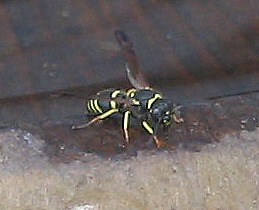
So far, I have seen one cabbage white butterfly flitting across my lawn (though I think he was more interested in the clover than the butterfly garden). The birds are visiting my birdbath daily, in particular some house sparrows who nest in a birdhouse next door. I have more varieties of insect and spider than I know what to do with, including this potter wasp who surprised me while he was having a sip of water from the wet stone at the edge of my birdbath:


I also noticed a spider carring her egg sac across the ground, presumably to bring it somewhere safe. That was pretty cool - I had never seen a spider "move house" before. So far, no butterflies visiting the garden itself, that I have noticed yet, but I have high hopes. I have provided some caterpillar host plants, and lots of nectar plants for the adults. I hope it's a veritable buffet by summer.

Meanwhile, I'll be the one doing the enjoying.

Monday, May 02, 2011

On The Bright Side

It always seems to pour when I want to garden. And, silly me, I find myself doing the gardening anyway.

Last year, it was two days of pouring rain while I did our front foundation landscaping. REALLY pouring. As in, Take Three Showers That Day, Look Like The Loser In A Mud Wrestling Match, pouring. And yet, I have a lovely garden in front, just beginning to wake up to spring. The lamium is already beginning to flower, which makes those early bumblebees happy. One of my "Autumn Joy" sedums did not survive the winter, and will probably be replaced by some spring or fall bloomer. The boxwood is sprouting new growth, and even my astilbe (the blooms of which I have not yet seen because I bought it at the end of the season on clearance last year) have burst from the ground in what seems one day.

This year, I am battling the rain to get my butterfly garden in. I started over the weekend in what was, by divine Providence, the Perfect Weekend to do this. I wasn't finished by the time the sun went down, but I decided to save the rest for today.

Naturally, it rained. But, on the heels of last year's rain battle, I forged ahead anyway and got the last of my plants in, as well as the edging. (Much easier than the edging I used for the front, since this just connects to itself and then stakes into the ground. Not perfect, and not breathtaking, but I hope to have so many flowers in there ya just can't see the darn stuff for long. Hope springing eternal, and all that.) And when I was done, and decided to photograph my efforts, I was rewarded with two very lovely portraits of two of my new charges. The first is the aquilegia, or columbine, you see at the top of this entry.

The second is this beautiful little shot, totally unplanned and somehow perfectly sprinkled with rain. This is dianthus "Neon Star," also called pinks because of the zigzag border of its flower petals. This is a cousin to your familiar carnations, and smells like cloves! Mmmmmm. Reminds me of my mother's Easter baking.

The flowers I am putting in this butterfly garden are purported to be magnets for butterflies and hummingbirds. All of which will, I hope, afford me lots and lots of great new pictures to share with you. Cheers!

Thursday, September 02, 2010

Go Green, Be Serene

Recently, I redid our front landscape, switching from a plain-lawn foundation with one lonely Dwarf Alberta Spruce, to a properly mulched, planted bed with a variety of flowers and shrubs. I intend to keep up my new, flowery landscape with organic methods. Yesterday, Mother Nature sent me a little thank-you note for my efforts.

I arrived home yesterday afternoon and made a short trip out front to check how my landscaping is holding up during our recent hot weather. Among the plants I put in the bed were two specimens of Lamium maculatum "Shell Pink," commonly referred to as spotted deadnettle. As a ground cover, Lamium seemed to be the answer to the erosion problems I was having, wherein part of my lawn would wash into my driveway during each heavy rain. This little plant, I had learned, was also a good welcome wagon for bees and butterflies.

And so it is. Just as I walked out to look things over yesterday evening, a bumblebee trundled along and visited both plants, dotting each flower carefully before going on his way. So I spent a few minutes of my otherwise hectic day watching him work, and strangely enough, all the noise and craziness of my day drained away just like that. Amazing how your perspective can change when you disconnect from technology and get your hands messy for a while.

Next spring, I have plans to expand my wildlife offerings, and make a little less lawn with a little more flowers. I have learned this summer what most gardeners already know - that it's good for the soul to get outside and play in the dirt. I'll let you know how I progress!