Navigation Bar

Showing posts with label gardening. Show all posts

Thursday, June 11, 2026

Summer Flowers and Adventure Escapes

Gems in the Garden

David Austin Rose 'Emily Bronte'
Maidenhair Fern
English Lavender 'SuperBlue'

Summer's unofficially here, which means my garden is bursting with beautiful flowers. I forget how much I miss the flowers and birdsong until I'm able to throw open the windows and welcome spring back to NY. I often go out to the garden with my camera and forget to take photos because I'm enjoying the beauty.

Did you know that even a few minutes a day spent with nature can do wonders for your physical and mental health? Even tending a potted plant is beneficial...further proof that we were not meant to sit at a desk for hours, staring at a screen. Get out that sunscreen and pay Mother Nature a visit! She misses you.

Gems in the Ground

Libby
Herkimer KOA
Herkimer Diamonds

I've scaled back my writing engagements this year to travel with my husband in our travel trailer, affectionately dubbed "Libby" (and maybe collect some new stories to tell). Recently, we went to

Sunday, April 21, 2024

Book Signing Season / Gardening Season


 Book Signing Season is Here!

I have come to adore book signing season. It's a time to meet people, talk books, and hang out with my author friends, The Wandering Wordsmiths (You can join The Wandering Wordsmiths Readers Group here to stay on top of all the news!).

My first signing of the season will be at Books End Bookshop in Syracuse, NY. I hope you'll come see me and chat about writing and your favorite reads...and maybe pick up a gift for Mom, since Mother's Day is the next day! (Last-minute shopper? I got you covered. 😁)

If you're interested in checking me out at any of the scheduled events this year, you can see the whole list at https://www.nickigreenwood.com/news/index.html#events.

Gardening Season!

I'm also just as excited about gardening season, and have been patiently placating myself with a bevy of house plants, some of which you can see at https://www.facebook.com/media/set/?set=a.421398597896313&type=3.

I've already visited my favorite local greenhouse and picked out some plants, but it's still too chilly at night to keep them outside. While I wait (not so patiently), I will put them out during the day, then bring them in at night to protect them from the chill.

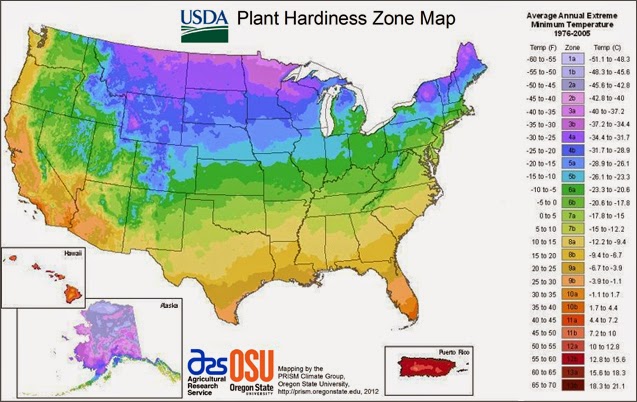
The USDA adjusts the map of its growing zones every ten years or so. What's a growing zone? Simply a map of the average climate conditions in your area, which helps you predict what plants will thrive where you live. The higher the zone number, the hotter your zone and the longer your growing season, so plants that thrive in Zone 8, for example, will do very poorly if kept outside year-round (and probably die) in Zone 3.

The growing zone in my neck of the woods was changed last year from 5B to 6A. That doesn't seem like much of a difference, but our conditions have warmed just enough to make it more habitable for certain plants. For example, I have finally managed to grow lavender with some reliability! I have used it for cooking and scented sachets, and because I love the scent so much it makes me extra happy.

The rule of thumb is not to plant outside until around Mother's Day, when nighttime temperatures are reliably above freezing. So...we wait. Not quite patiently.

If you live in the Northern Hemisphere, Happy Spring!

Thursday, January 04, 2024

To Resolve or Not to Resolve?


Happy New Year!
 
How is it possible that it's 2024 already? The holidays have gone by in what seems like a rush, and Greenwood House has settled in for winter. Normally, I want to hibernate with the rest of the world here in NY, but it's also a time for planning and preparing. The Wandering Wordsmiths will soon be gearing up for this year's book signing season, so watch for new places where you can meet us.
 
 
I'll be winter sowing some plants soon for gardening in the spring. Here in NY, anything you can do to get a jump on the growing season is a good thing! Our growing zone was recently changed when the USDA redid their maps, which happens every ten years or so. We went from 5B to 6A, which isn't much, but my rosemary and sage are still going in the raised bed, if you can believe it. For now, I have cuttings taken from most of my herbs, as well as some grocery store parsley and scallions, that are awaiting the return of spring.

Making Your Plan

A lot of people make New Year's resolutions: quit smoking, start exercising, do that thing you've been putting off. Mine is, as always, to get a book out the door. THE GINGERBREAD SHRED made it out in time for Christmas, so it's time to turn my attention to other projects. I'm taking this month to rest, but come February, I'll be working on the sequel to FREAK FRAT and hoping to get it nailed down.

The truth is, you don't need to wait for January 1st to make a resolution. You can do it any year, month, week, day, or hour you want. And if you slip and have a cheeseburger on a gym day, that's okay. Just keep resolving. You don't even need to call it a resolution. Sometimes naming it as a resolution or promise puts the idea in your mind that once it's broken, you've lost. Maybe just call it a change or process. The occasional slip won't break you. It's just a step in the process.

The sequel to FREAK FRAT has been a years-long undertaking, and that's okay, too. Sometimes stories need time to marinate. I need to trust the steps in the process, too. Whatever you decide to do with your new year, I hope it's a good one. Happy New Year, and happy reading!

Sunday, April 19, 2020

Fear Itself / The Fudge Ripple Effect now available for pre-order!

Fear Itself

It's been a difficult 2020 for many of us. My day job is at a pharmacy, so in the midst of the coronavirus pandemic, I am faced with equal parts blessing and curse. On one hand, I am fortunate to have a job where I am needed. The virus has put some 22 million Americans to date out of work (not to mention the world numbers), and many are struggling to put food on the table both financially and logistically, given the restrictions on food purchases and days we're allowed to go out.

On the other hand, I'm terrified. The first day the seriousness hit me was the day our children got pulled out of school. I cried on the drive home. I sat on the floor of my kitchen hugging my dog, and cried some more. I didn't want to get out of bed and go to work the next day. I didn't want to get out of bed at all. The entire world is suffering.  We can't fight this virus, and can't run from it.

But.

People with sewing machines are making masks for complete strangers. Others with 3D printers are making face shields. Companies who never turned a hand at the medical industry are making ventilators. Some are sharing food or going out for their at-risk neighbors. Gardeners (including me) are gearing up for the growing season to provide food for family and friends. Still more are trying their hand at canning, cooking and baking and getting their families involved in the process. Artists are sharing their work with the world and helping us ease our worries for a little while. We're turning our attention to each other. We're remembering our connections. This is hope. And we can hang onto that.


The Fudge Ripple Effect on Pre-Order!

I am happy to share the ebook pre-order release of THE FUDGE RIPPLE EFFECT! This short, sweet read is only $1.99 on Amazon, releasing June 15th, but you can pre-order it right now!

ABOUT THE FUDGE RIPPLE EFFECT

Love is unpredictable...but it sure is sweet.

Jax Thatcher loves creating stained glass, but love can't pay the bills. After a disastrous relationship, love lands her back in Narragansett with her overbearing parents and a mountain of I-told-you-so's. Broke and brokenhearted, she's forced to abandon her romantic and artistic dreams. Fortunately for Jax, fate is making waves on her behalf.

Sawyer Hennessey, the handsome owner of a generations-old soda fountain, has been burned in love himself. When an accident shatters the stained-glass transom of his shop's front window, Jax splashes into his quiet life.

Suspicious of their growing feelings, Jax and Sawyer can't resist testing the waters. They have a lot to learn about the ripples people make in each other's lives, and how one little drop might lead to an outpouring of love.

Thursday, June 27, 2019

Notes from the Garden: Diversity, Not Just for Humans

A Tale of Two Properties

Once upon a time, I had a neighbor who was very, very particular about his lawn. He was often to be found clipping errant long blades of grass with scissors to keep it looking tidy. His lawn was lushly green and beautiful ... but there was no wildlife. Birds passed over it to yards beyond. Without trees, squirrels found no reason to stay. Rabbits went to the next lot in search of clover. If the wildlife you can spot at an easy glance is passing your yard by, you can almost bet the creatures you don't see are doing the same.


Matchy-Matchy

Mother Nature hates monocultures - those manmade, one-species wonders that allow no room for the wonderful variety of wildlife available even in suburban or urban areas. A grass lawn is exactly that; while it may be lovely to the human eye, there is no space for a real, natural ecosystem. Lawns need frequent care in the form of water, fertilizer, mowing, weed control, and pest control.

Nature doesn't need such helicopter parenting. Left to grow, a wild space will invite a variety of plant and animal species that will sustain itself. Planting native species reduces the amount of necessary yard work and encourages our greatest ally in food production: pollinators.

Also, a natural habitat isn't boring.

Save Them, Save Us

The two greatest threats to pollinators are pesticides and habitat destruction. Products such as glyphosate (the chemical in Roundup®) and neonicotinoids (pesticides used in big-box garden center plants and flowers) are persistent and harmful to pollinators of all species. These products can stay in plant tissues and soils for years. They poison insects. In short, they're killing bees.

Guess what happens if we kill the bees? No one is left to pollinate our food supply.  Farmers are finding it necessary to truck bees in from far afield in order to pollinate their crops. Pesticides are thought to be responsible for widespread bee colony collapse. Bees are dying at an unprecedented rate. When they go, so will we, unless we do something about it.


Flowers, Flowers Everywhere

Planting native flowers not only beautifies your property and increases its value, but it helps the pollinators. Host plants are important for butterfly caterpillars such as that of the monarch butterfly, which is in desperate need of pesticide-free sanctuaries. Dedicating even a small area of your yard (or a large container if you're in an urban area) can help save these pollinators and enrich the ecosystem where you live.


Bees, in particular, have been in the news many times of late because their rate of decline is alarming. Fortunately, bees are easy to please. Plant as large an area as you can with a few varieties of brightly-colored, native flowers (and if you're lazy like me, plant perennials which will come back every year with no work on your part). Use this tool developed by the National Wildlife Federation to help you decide what will work in your area. Try to stagger bloom times of each variety. Vow to remove all pesticide use from your property in favor of natural weed controls such as hand-pulling ... or my favorite, native plants which will crowd out the unwanted weeds!


The Little Hedge that Could

My neighbor would do annual battle with the privet hedge on our shared border. He cut it to the ground each year, a sad little six-inch-tall row of shrubs struggling to survive. Privet is non-native in my area. I wondered if he thought he was doing the right thing by cutting it down, but it always left me scratching my head. When new neighbors moved in, they didn't cut the hedge. We didn't, either. It grew. And grew. And then flowered.

And then came the wildlife.

Birds took up residence, nesting and singing. I now have a catbird who serenades me beautifully outside my office window while I write. The hedge, now half again as tall as me, shelters and shades squirrels and rabbits. Bumblebees and honeybees flock to it like I've drawn them there with a magnet. My allergies go haywire every spring and summer, and this hedge is not a native to New York State, but the payoff is well worth the cost of leaving it there.

After all, I love food. Don't you?


Sunday, August 05, 2018

Notes from the Garden

It's been a very hot, humid summer here in Upstate New York. We broke down and put air conditioners in the bedrooms so we could sleep comfortably at night. The garden, however, seems unbothered by the heat as long as I water daily. In the big pot on the corner of my deck, I planted some lavender, and was pleasantly surprised by the return of some perennials from the previous year, including alyssum and a carnation. It made a sweet little arrangement, and now that the spring carnations have faded, I have a bunch of sunny red and yellow gaillardia putting on a show.  (This photo is from spring, taken from an upper window, so it's a bit blurry. Below and to the right are a low planter filled with culinary and creeping thyme, and a slightly taller pot chock full of chives.)


With the passing of spring, I was disheartened to see that my beautiful Pulmonaria was killed off by the harsh winter, but my garden had another surprise for me: it survived! There are many little shoots which have grown up in the old spot, and what's more, my Purple Coneflower gave me a volunteer seedling in the empty spot right behind it! Mother Nature continues to surprise and delight me. The bees like it, too. After the Lamium has fed all the bumblebees, the Coneflower begins putting on a feast for the honeybees. I hope they have a big, active hive somewhere nearby. 😊


This summer, I must be doing something right in my vegetable garden, because my tomato plants are taller than me! I have Roma, Heirloom, Sweet 100 Cherry, and Beefsteak tomatoes, and they are beyond delicious. The peas didn't make it, but my bush green beans are providing us with a nice bumper crop. We've all the got Romaine lettuce we can eat, and even a little supply of carrots. Mind you, all this comes from a little 4' x 8' raised garden bed that I do not weed, apply with pesticides, or otherwise fuss with other than to water each morning for fifteen minutes when I know it won't rain. You CAN farm in a small space, and it's extremely satisfying to get good food right from your own backyard. That, and there's no better balm to the spirit than getting your hands in the dirt to provide for your family or grow something beautiful.


This morning, when I went out with my son to pick tomatoes for dinner, Mother Nature had yet another surprise for me: a Northern Leopard Frog! Frogs are endangered due to pesticide use, as they are sensitive to chemicals in their environment. Our mulched beds are packed full of crickets, and I wondered if I'd lure at least a toad into my yard. Imagine my surprise when I found this guy peeking up at me from beside my garden bed! So happy to see he felt our little corner of the world was a good visiting spot. I hope you're enjoying the rest of your summer, in spite of the heat. I know I am!


Thursday, August 17, 2017

Notes From the Garden

It's mid-August, and I can already feel autumn on the horizon. Central New York got a lot of rain this spring and summer. My vegetable garden is thriving (tomatoes galore and zucchini for days!), and my plants and flowers are showing me just what a wildlife habitat is all about.


I have never tried growing zucchini before, but with our family's discovery that we love zucchini noodles ("zoodles"), we decided to give it a try. They do like lots of water. Make no mistake: if you let them get away from you, as we did, you will find yourself with zucchini that are a foot and a half long, and they will keep on going if you don't cut them (or until the squash borers find them). The one on the far right is the size they are supposed to be at harvest, a nice, tender inch and a half in diameter. Meanwhile, my grape tomatoes have exploded, and are still cheerfully producing as many as we can eat. We have planted our beefsteak tomato plants too close together, so they aren't getting as large as I'd like, but they are producing some delicious, meaty snack-size tomatoes. As I harvested, a bumblebee visited the new flowers. (I made sure to thank him. 😉) Next year, we plan to expand our garden, space out our plants more, and maybe install some new vegetable varieties. This year was for fun and practice! Tomatoes are so good right off the plant, still warm from the sun.


Meanwhile, my butterfly garden has been playing host to all sorts of insects. The crickets serenade us each evening. Honeybees are enjoying my purple coneflower. I never use pesticides on my property, so I'm thrilled to have them visit in the hope that someone, somewhere, is benefiting from the delicious honey they provide (even if it's just the bees themselves!).


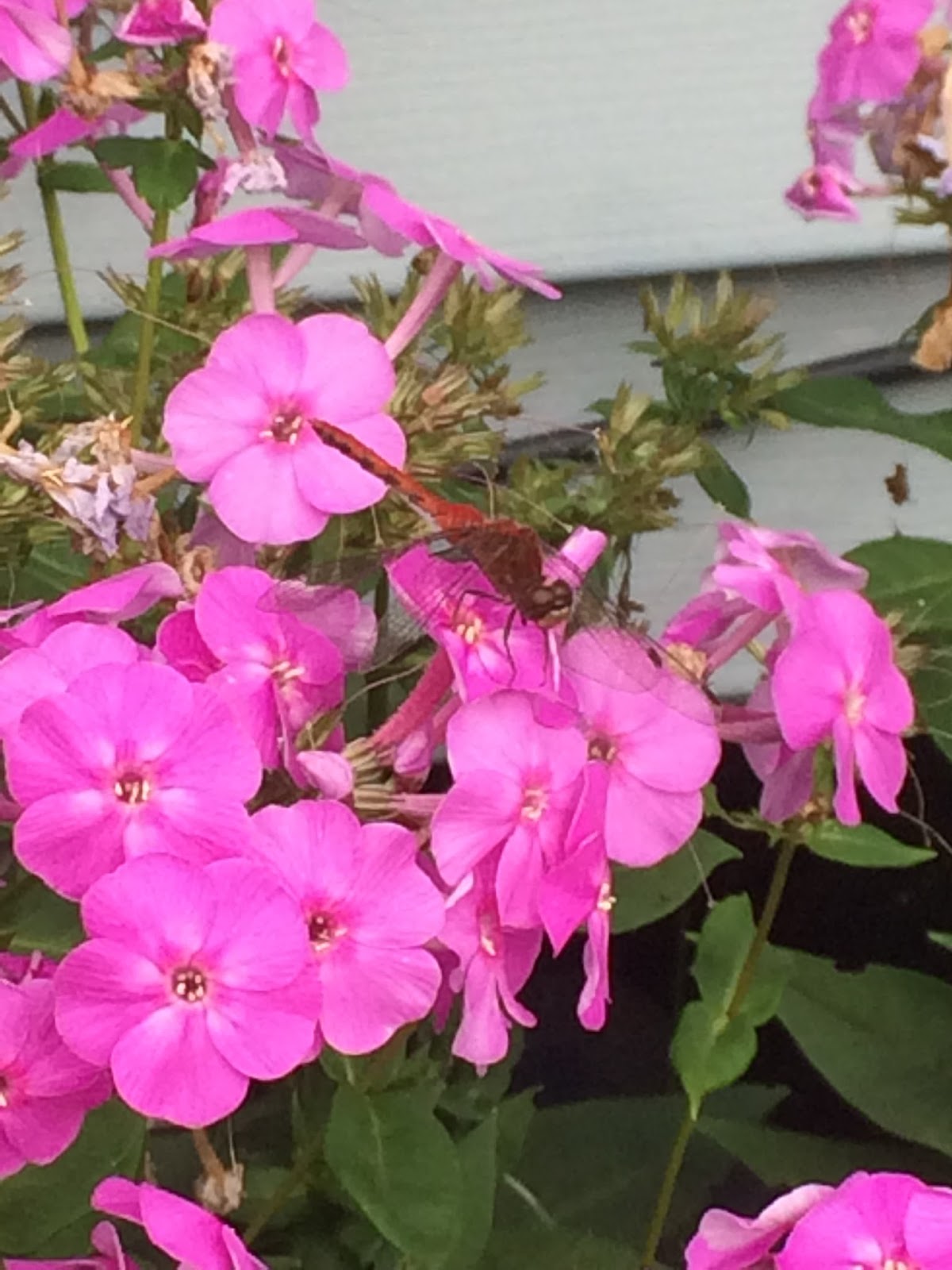
This evening, to my delight, I found a Cherry-Faced Meadowhawk Dragonfly resting on my tall phlox. He was hard to miss, being 2-1/2" to 3" in length. Most dragonflies seem to be rather skittish, but this fellow was clearly not bothered when I got right up close to him to snap a photograph on my phone.


I had thought my swamp milkweed was a goner, but it has managed to surprise me with a couple of hardy plants, one of which is now in bloom. It has been a great spring and summer for the gardens. My sedum is beginning to bud in preparation for fall bloom, and I'll be back with more pictures. See you soon!

Friday, April 22, 2016

Happy Earth Day!


Happy Earth Day!

I hope you're doing something outdoorsy today - at least for a little while.  I spent last weekend planting flower and vegetable seeds in preparation for the growing season.  I've already got some sprouts!  I can't wait to get out there into my butterfly garden and positively pack it with butterfly-friendly flowers.  I've started spinach, lettuce, and beet greens in my raised bed greenhouse, and the warmer-season seeds like beans, peppers, and tomatoes in peat pots indoors.

Free Book!

The Earth Day Giveaway is still going on, and there aren't a lot of entries yet, so if you're looking for a free read this spring, what better way than to fill out the simple form at this link, and tell me what you're up to this Earth Day? Click here to enter: https://nickigreenwood.wufoo.com/forms/nickigreenwoodcom-earth-day-giveaway/

Have a terrific Earth Day, everyone!

Sunday, July 05, 2015

Fort Ticonderoga


If there's a place you want to be on the Fourth of July, it's Fort Ticonderoga. It was amazing to witness how people lived during the founding of the United States, from what they ate, to how they dressed, to how they slept and fought. The raising of the colors, to the music from the Fife & Drum Corps, actually gave me chills.


I can't even begin to tell you how geeky I was over the amazing engravings on the 18th century powder horns belonging to soldiers of the era. Then there were the weapons and arrowheads and pieces of pottery and ... well, you should go there, that's what.


The original fort was mainly earthworks. The stone was added much later. Still, it boasts one of the most beautiful vistas I've ever seen, of New York's Adirondacks and Vermont's Green Mountains.


If that isn't enough to impress you, take a walk through the King's Garden, modeled after 18th century military gardens. The walled garden was part of a project in the early 1900's by the wealthy Pell family, to restore and preserve the property. It must have been even more beautiful back in the day.


Find many more photos of my visit to Fort Ticonderoga in my Facebook album for the site. Hope you had a happy Fourth, America!

Thursday, April 30, 2015

Notes From the Garden

It's nearly May, and my gardens are beginning to wake up.  After a long winter, I've grown desperate for flowers and green, growing things.  The trick is to know which ones will survive those still-chilly nights ... or if they wouldn't, how to help them do so.

In my previous blog post, I talked about a raised bed greenhouse for tender plants.  It snowed since, and I lost one of my two tomato plants even though I had a cloche over it and the greenhouse cover down.  The other survived, so I'll remember that variety for next year's planting.  (The cloches I bought were from Hobby Lobby and ran about $20 on their bi-monthly 50% off sale.)

The picture at the top is Viola "Rebecca," and it's supposed to be hardy in my zone (Zone 5).  Whether or not that actually happens, I'll find out, but it appears to love shade and moist soil, and should bloom through fall if I pinch back the blooms once they die.  So far, so good, and the flowers smell like vanilla!  Yum!


My mother bought me a cast-cement bunny for the front landscaping.  I couldn't resist him.  He looks like a storybook rabbit.  A garden just doesn't seem complete without statuary or hardscaping to offset all that greenery.  If you can't afford statuary, bring home a large stone from a trip somewhere - or a trip through your local woods - to set in your garden!  It makes a wonderful memory to add to your outdoor living space.  Just be sure you have permission to take it, and that it's thoroughly cleaned before re-homing so you don't accidentally put chemicals or soil diseases into your soil.  (You can find ways to sterilize non-native stones in many resources online.)


My overgrown butterfly garden has managed to surprise me.  I thought it was going to need a total overhaul, but the early bulbs have flowered, and my wildly-vining clematis is beginning to leaf out.  I may just let nature do its thing, because even the creeping charlie has cute little blue flowers.  Creeping charlie is considered an invasive weed, but the bees and butterflies like it, so I leave it alone as long as it doesn't overtake other plants.  Besides, it keeps the soil in place when it rains!  Happy Spring!


Wednesday, April 22, 2015

Earth Day Project - Raised Bed Greenhouse


In Zone 5, where we're still wearing our parkas into April (that's New York, slathered in blue), it's hard to get a jump on the growing season.  Last year, by the time I put seeds into the ground, it was too short a season to get a meaningful booster crop for our dinner table.  This year, I decided to try my hand at making a cheapskate - er, economical - greenhouse or for our raised bed garden.

If you're like me, you don't have a lot of scratch for a glazed greenhouse.  While it might be a dream come true to afford one, the reality is, the more you spend on the greenhouse, the less money you have to put something in it.  And isn't that the point of gardening?

My trip to the hardware store yielded the following items for under $30.00:

  • One bag of assorted plastic clamps
  • One package of 9' x 12', 2 mil clear plastic drop cloth
  • Two ten-foot pieces of 1/2" PVC pipe (conduit is cheaper, but I needed something smaller-gauge so it was easier to bend)
  • One 1" PVC cross

That's it - five items!  This is all you need to make a hoop house or cold frame for your raised bed garden.


To assemble the frame, insert each section of PVC pipe into the cross, making a large "X."  The cross is loose enough to admit both pieces of PVC, which will lie one top of the other inside the cross where they intersect.  The cross has no sharp edges to tear your plastic sheeting, and there's no tool-assisted assembly.  Tension holds it all together once you put it into your raised bed.


Next, carry the structure to your bed and sink the ends of the pipes down about 10" into the corners of your raised bed.  The farther down you sink it, the more secure your cold frame will be.  If your bed isn't as deep as mine, or you're concerned about wind, you can secure the ends by sliding them into metal, U-shaped pipe hangers or "hanger tape" (also available from your hardware store) screwed to the corners of your box.  I opted for a more low-tech solution, as my raised bed is deep enough not to make wind a concern.  There's no one right answer, as long as it works for you!  When you've set up the frame, it will look like this:


Next, open the package of poly sheeting and lay it over the frame.  It's better to err on the generous side, so you have enough around the perimeter to clamp some of the sheeting edges to your box, preventing air from getting into your raised bed and chilling your plants. Trim the sheeting to size.  My raised bed is about 4' x 4' and I was left with a section of about 4' x 12' - good for covering containered herbs on chilly days or putting over that compost pile to help heat and decompose the organic matter!

Once you've trimmed the sheeting, clamp the edges down to the box, being sure that you have enough hanging over the edge to prevent drafts.  Use as many of those clamps as you like, depending on your wind conditions.  I still have some left, which I'm sure the hubby can use!

After that, you're done!  The entire project took me under a half an hour, with no technical know-how or special tools.  The temperature inside the greenhouse is noticeably warmer than outside.  You can open some or all of the cover on warmer, sunnier days so you don't "cook" your plants.  You can also use this setup to grow a four-season harvest!  Leafy vegetables like spinach are great at surviving the winter and will satisfy that need for fresh greens when snow's on the ground.  There are many more vegetables that can be grown year-round.  Their vigor depends on length of daylight and protection from the moisture-stealing winter winds.  Check your library or the Internet for possibilities available for your agricultural zone.

When you're finished using the greenhouse (i.e. your zone has finally reached a warm enough daily temperature not to need it), simply break it down and store it.  It's that easy!  Happy gardening, and Happy Earth Day!

Wednesday, April 15, 2015

Wakey, Wakey (Spring in the Garden)!


There's nothing more wonderful than seeing the first flowers of spring pop up in your garden - even if it's overgrown like mine! I've let it get a little wild, but my butterfly garden still manages to impress me.  Among the weeds and grasses that have encroached in it are the first hardy little flowers popping up from bulbs, like the windflower above (Anemone blanda). These little bursts of color are like Nature's gift for our patience over a long, harsh winter.


The flowers above are Chionodoxa, aptly named glory-of-the-snow because this flower is one of the earliest to arrive after the cold season has finished. It's hard to imagine a flower so delicate braving those still-frosty nights.


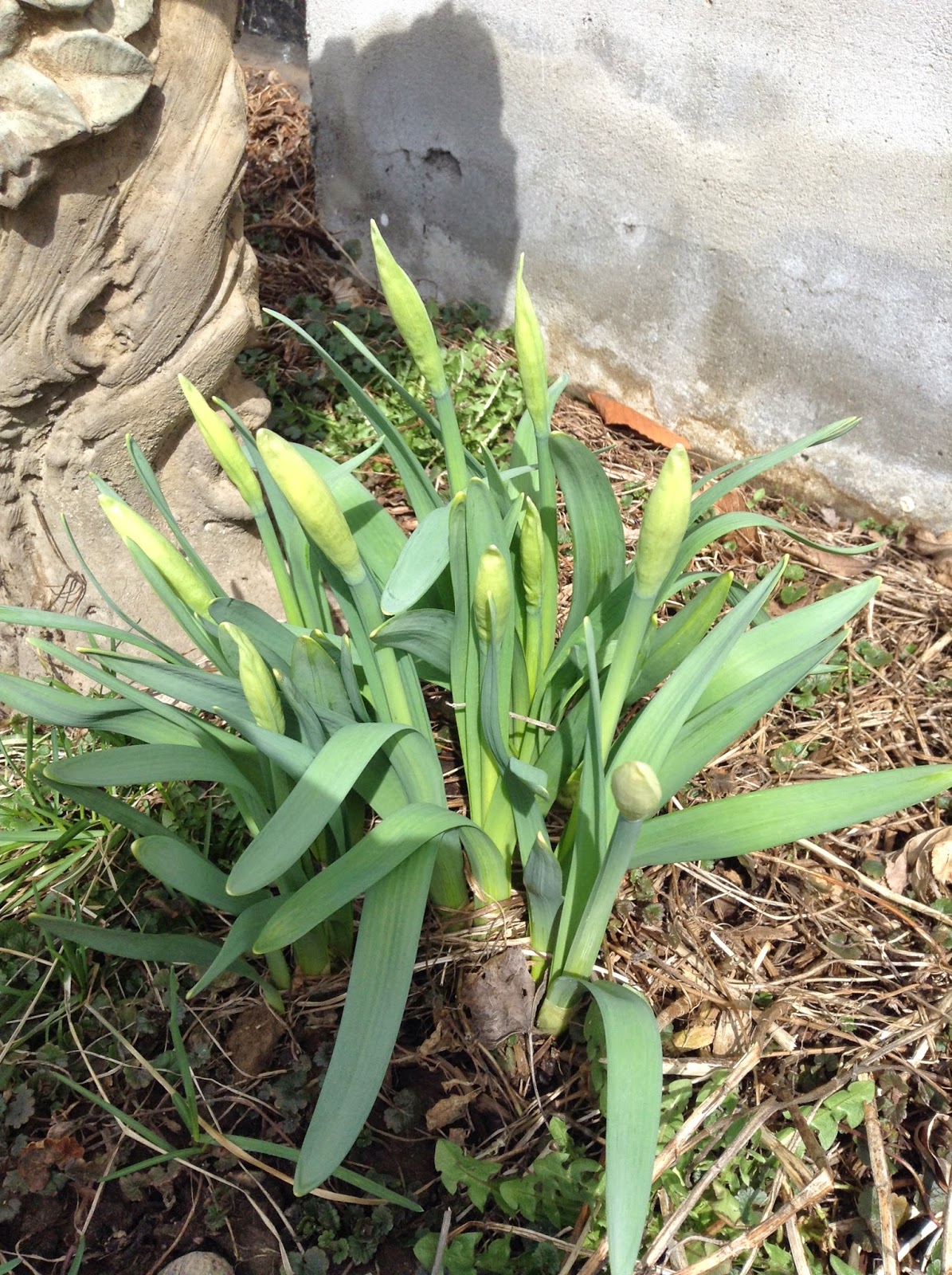
Finally, framing my stone birdbath are groups of daffodils just starting to bud.  I have scads of daffodils in the yard, and tulips, too, that are begging to be transplanted to a more natural bed.  That's just one of the projects on tap this spring.  I can't wait to get to my favorite garden store to begin choosing the new plants for my vegetable and butterfly gardens!

Friday, March 20, 2015

Happy Spring!

Spring officially begins today, and not a moment too soon, if you ask me.  It's been an exceptionally difficult winter.  We've been spoiled for so many years in the Northeast by mild winters.  When the snowbanks started getting taller than me, it was a bit much to take.  So, welcome to green grass and singing birds and sunny days!

My gardens are in a sad state, so one of my outdoor to-dos this spring will be to tear out the butterfly garden's messy spots and start fresh.  My vegetable garden needs a top-off with some new compost, and I think I will start with already-sprouted plants this year to get a jump on the growing season.  Oh, a reason to go to my garden supply store?  As if I needed one!

Indoors, I plan to open every single window to flush out that stale air.  House plants can only do so much!  We're also looking into getting some new flooring in the kitchen, foyer, and living room. It will be exciting to have fresh, easy-clean floors.  I can't wait to get started.

Happy Spring!

Thursday, March 20, 2014

Happy Spring!


It's finally spring, even though there's still a chill in the air and snow on the ground in NY.  Living here, I've come to realize that all that snow and cold weather makes me appreciate the return of the warmth even more.  Soon, we'll see flowers and grass and budding trees!  Just writing today to wish you a happy one, and I hope you enjoy it!


This year, I have plans to make my gardens better than ever, pulling out what hasn't worked, and adding more of what does.  As always, in April, I'll be hosting my "Earth Day Giveaway" contest, so be on the lookout for that.  Until then, Happy Spring!

Thursday, February 20, 2014

Gardening for Bees

If you've been following my blog for a while, you know I have three gardens: one is my front landscape, one is specifically for butterflies, and one is for veggies to feed my family.  The landscape and butterfly gardens are also a favorite haunt of many different kinds of insects, including bees.
 
I get excited when I see bees these days, because worldwide, they're in decline, just like butterflies.  Beekeepers have been reporting a 30 to 50 percent loss of their hives.  That's staggering, and it means trouble for our food industry.  We are much more dependent on bees than most people realize for our fruits and vegetables.  Losing them would mean a huge hole in the food web, and we could find ourselves quite literally starving.
 
The Culprit
 
Research is pointing at systemic insecticides called neonicotinoids, which infiltrate all parts of the plants on which they are used.  That includes the pollen which bees collect and eat.  This mass application of a pesticide is having a ripple effect that, ultimately, harms our food supply rather than helping it.
 
Pesticides are not a new threat.  In 1962, Rachel Carson published a book called Silent Spring, which addressed the negative effects of pesticides on birds.  More than fifty years later, we're still fighting this fight, and it's hard to understand why.
 
Bee-ing the Solution
 
What can you do?  Well, you can do what I did: plant native-plant gardens, and vow to go pesticide-free.  There are many articles and resources on environmental gardening, and the results are healthier for you and your planet.  Share your yard with insects and wildlife, and form a mutual respect for your wild neighbors.  (Most bees are actually quite docile - too busy dotting your flowers in search of pollen to be bothered with you!)
 
There are caveats to bee- and butterfly-friendly plant claims.  A recent article in Organic Gardening caught my attention on this subject, and I did some investigating.  The environmental group Friends of the Earth tested a small sampling of plants purchased from major chain stores like Home Depot and Lowe's.  They found neonicotinoids in over half of the plants tested, even though the plants were labeled "bee friendly."  So, a warning: although that species of aster might be favored by bees, the specimen you're looking at could poison them.
 
Your best bet is to find plants from reputable garden centers that use no pesticides on their bee-friendly stock ... or from a friendly, local gardener who does the same.  Neonicotinoids can stay present in plant tissue for several years, so you could be doing harm to the bee and butterfly populations without even realizing it.  Make sure that what you put into your garden is truly organic and pesticide-free.  The bees will thank you by making sure your flowers, fruits and vegetables come back fuller and more robust each year.

Saturday, November 02, 2013

Congrats to the Winner of my LASR Halloween Blogfest Prize!

 
Congratulations to Trix, who won my prize at LASR's Halloween Blogfest! (See the previous post for details.) Trix commented that she has a garden full of hummingbirds, now that she has planted red sage. What a great way to invite wildlife into your garden!

Habitat loss is a hummingbird's worst enemy, but humans can be their best friends. A garden full of shrubs to hide or nest in, flowers to use for nectar sources, and even artificial feeders, can be life-saving habitat for a hungry hummingbird. These birds need to eat about every ten minutes because of their outstanding metabolism! Watch a feeder or nectar source long enough, and you will see these little flying jewels return, zip-zip-zip, to feed again and again.

When using an artificial feeder, it's extremely important to clean it regularly - every three to four days, or more frequently when it's hot out. Purchase one with bee guards, and invest in an ant guard to keep unwanted pests away from the food source. These migratory birds will show up at your feeders and gardens from spring through fall to tank up for their long flights. Help them out with a variety of flowers that bloom at staggered times, and keep those artificial feeders stocked and ready for the show.

Happy Autumn, everyone! Hope you (and your resident wildlife) enjoy the season.

Tuesday, October 29, 2013

Guest Blogging TODAY at Long and Short Reviews!


I'm guest blogging TODAY at the Long and Short Reviews Halloween Blogfest!  LASR is celebrating the season with autumn-themed posts from authors across many exciting genres.  The best part is, you can win prizes!  Comment on my blog at LASR TODAY for a chance to win a $10 Williams-Sonoma eGift card! Hurry, because the Halloween Blogfest ends November 1st!

To comment, follow this link: http://ow.ly/qgsMp

Monday, August 12, 2013

Summer's Still Rocking Along!

It's almost mid-August, can you believe it? I sure can't. Feels like it's just flying by! I have planted some sunflowers and begun to mulch my garden for the fall. Got some pumpkins planted in the raised bed garden, and I'm hoping we'll at least get some bitty pumpkins to enjoy this autumn.

But for now, the sun's still shining, and there's plenty of outdoor fun to be had for the summer. I'm looking forward to a camping trip to the Adirondacks, and a little time off from work with my son before school starts up again.

And for you, there's still plenty of summer heat in the "Hot Fun in the Summertime" contest! You can win an electronic PDF copy of one of my books, absolutely free! Just click here to fill out the contest form. The contest ends August 31st, so hurry and get your entry in! I will announce the winner on the evening of September 1st, here and on my Facebook and Twitter feeds.

Enjoy the rest of your summer, folks!

Tuesday, July 16, 2013

Garden Update

Not much to talk about yet in the gardening department. I have romaine leaf lettuce now ready to be picked, and I have harvested the year's first crop of beans:

These beans are the "Royal Burgundy" variety, and some of them grow purple on the plant! They turn green when cooked, and trust me when I say they are light years better cooked fresh from your garden than anything that can be bought canned or frozen. I had forgotten how tasty fresh beans were. They are a "bush" variety, too, which means they don't need staking. Next year, I will be making a container for them all by themselves, they're so good.

My tomatoes were off to a slow start, and I think the copious amounts of rain killed off my hopes for eggplant and peppers, but we have corn! My husband wanted to plant corn in our raised-bed garden this year to see how well it does, and apparently it is doing swimmingly. I hope it tastes as good as it's looking! And the nice thing is, we will have cornstalks to decorate our house for fall! Oh, fall (and cooler weather) ... hurry up and get here! :)

Friday, August 17, 2012

If You Build It, They Will Come (v. 2.0)

Today's the day my persistence (and environmentally-concerned determination) paid off. Close to a year and a half after building my butterfly garden, I got what I've been waiting for.

I was outside today, thinking, "Gee, I really ought to trim back some of the leggier stuff in my garden. It's been so hot, I haven't done much, and everything's gone haywire." No sooner did I start trimming back the leggy stuff and unwanted volunteer seedings, than I hit the brakes. There, tucked in the back on a milkweed seedling, I found a Monarch Butterfly caterpillar!


Needless to say, I'm elated. This is what I built the garden for: to help along the Monarch species, which has been in a devastating decline due to habitat loss and pesticide use. And now, proof positive that my garden lives up to the purpose for which I built it!

Well, I ran right out and bought some mulch and began laying it ever-so-gently in between plants, where bare soil still existed (never did any mulching except a "green mulch" this year with a thick mat of Alyssum "Carpet-of-Snow" plants to keep the soil in place and somewhat moist). This will also help the various insects find places to hide.

Well, there I am with a bag of mulch on my shoulder, and as I approach the garden, I see a Giant Swallowtail on my butterfly bush:


Double yay! I am now considering registering my little side garden with Monarch Watch, an organization dedicated to helping this butterfly species survive. Of course, other species of butterfly and insect are always welcome. My property is wildlife-friendly, and I'm proud of that.

I don't even mind when the Ruby-Throated Hummingbirds fly by and holler at me to refill their feeder ... again. :)